
Introduction
Today, technology has become an intrinsic part of almost every activity—from completing assignments to making business transactions. In light of this change, technical literacy has moved away from the luxury of a select few, such as computer programmers or information technology professionals, and has become a prerequisite for both students and working people. From keeping track of all the latest technologies to learning about cybersecurity and using various tools and applications efficiently, this manual provides you with an overview of the meaning and importance of tech-savviness, its components, and the methods for developing it.
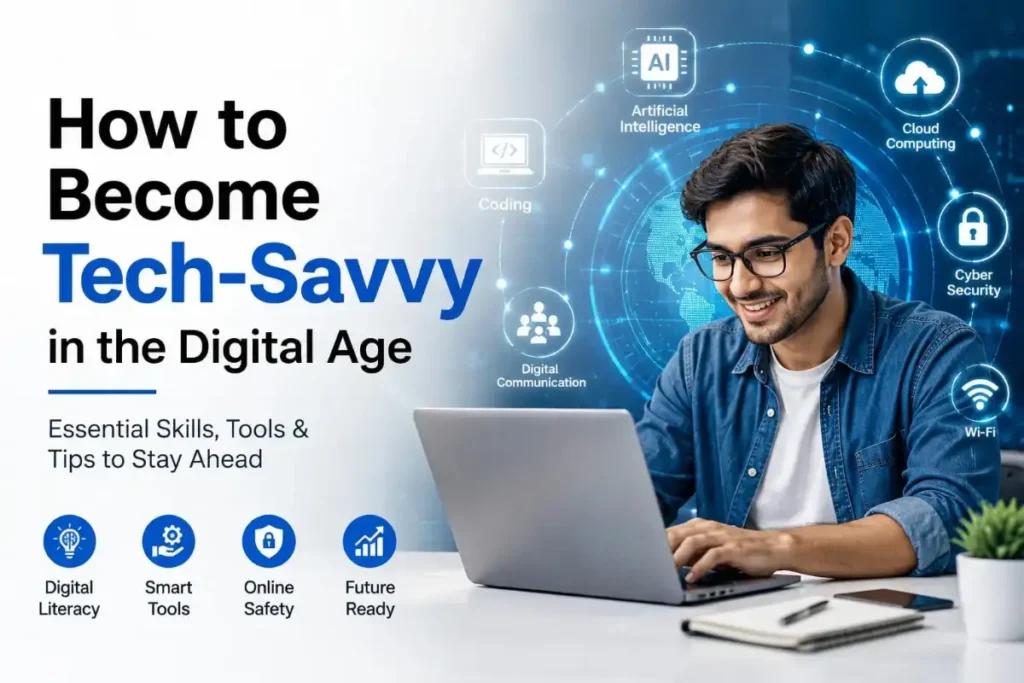
Understanding Tech-Savviness
What “tech-savvy” really means
- Expertise with Hardware/Software/Devices — Knowing how to make effective use of digital tools
- Adaptability—rather than simply being competent with one known app/device.
- Problem-solving—ability to resolve minor problems independently.
- Perceptiveness—understanding what tools actually resolve the problem as opposed to complicating it.
Why it matters for students and professionals
As such, this characteristic becomes relevant to students and professionals alike in slightly different ways. Tech-savvy students have the ability to conduct their studies faster by carrying out their research online, work collaboratively on documents, and submit their assignments through electronic means without losing valuable time due to technical issues. In the case of professionals, being tech-savvy enables them to automate repetitive tasks, communicate irrespective of time zones, and even adapt to changes in technological systems within the firm.
Core skill and knowledge areas
- Knowledge about hardware and operating systems
- Knowledge about popular software applications and cloud technology
- Basic understanding of programming languages
- Knowledge about internet safety and data security
- Knowledge about conducting research on the internet
Essential Skills for Becoming Tech-Savvy
After knowing what tech-savviness entails, the next logical move is pinpointing which skills to develop. Although it may be overwhelming to think about so many skills, most of the required ones fit into several categories.
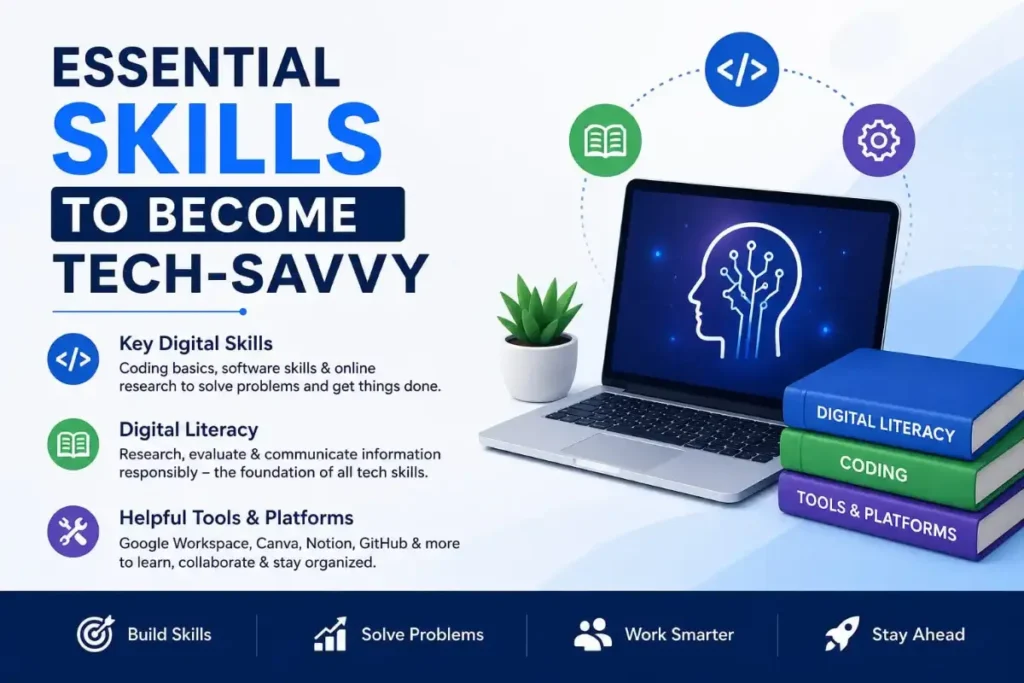
Key digital skills to build
First of all, understanding the basics of coding is becoming more and more useful, irrespective of whether you are planning to pursue a career in IT or not. Familiarity with logic and automation, including Python programming or some other form of coding, will give you the ability to solve your issues and understand how digital technologies operate. Secondly, software skills are equally important. Being able to use productivity software, spreadsheets, and presentations will help you do your daily tasks easily. Finally, solid online research skills will help you find relevant information.
The role of digital literacy
- Digital literacy includes researching, assessing, and communicating information using digital means responsibly.
- Goes beyond the basics—having an idea of why something is important, such as safeguarding your own information or identifying disinformation.
- Why this should come first—because it is fundamental to almost all other tech skills; improving this will improve tech-savviness most quickly.
Helpful tools and platforms
A few tools consistently help learners build these skills:
- Google Workspace or Microsoft 365 for document collaboration and file sharing
- Codecademy or freeCodeCamp for structured programming training
- Canva to learn about the basics of design and visuals
- Notion or Trello for project management and workflow building
- Google Scholar and library databases for academic and professional-level research on the internet
Practical Tips to Enhance Your Tech-Savviness
Now that we have recognized the necessary skills, the most logical thing to do is put them into practice. Here are some useful tips that should serve as a realistic starting point, especially for students.
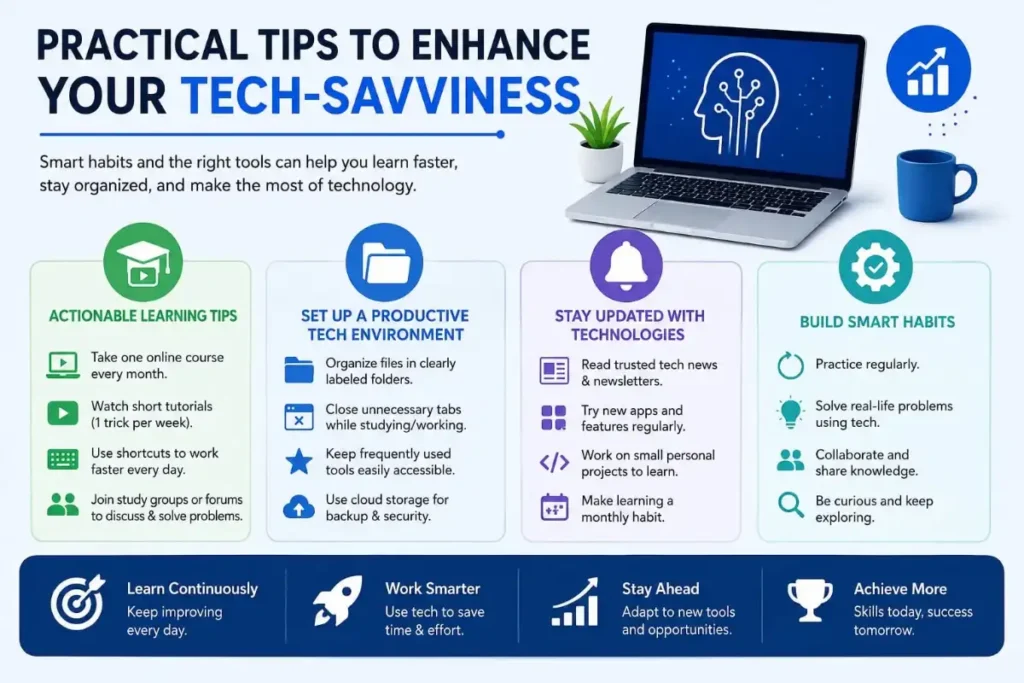
Actionable learning tips
- Take one online course for free every month from Coursera, edX, or Khan Academy.
- Watch brief video tutorials that teach you one software trick per week
- Type faster and use shortcuts to improve efficiency in your daily routine.
- Participate in a study group or forum where you can discuss issues and solve problems together.
Setting up a productive tech environment
- Organize files into clearly labeled folders for easy accessibility
- Close any unnecessary browser tabs when studying or working.
- Ensure that frequently used software tools are easily accessible.
- Use cloud storage for backup in case of failure of your device
Staying updated with emerging technologies
Technology evolves rapidly; therefore, keeping up to date is a constant process. Reading from trusted tech news outlets, getting newsletters from various sources, and making time for yourself each month to try out new apps are a few ways to always be up-to-date. Similarly, trying out new applications in a risk-free environment like a personal project gives you an opportunity to learn without any time pressure.
The Impact of Technology on Learning and Work
Academic success and career opportunities
- Students who are able to use technology efficiently will be able to do their research quicker, communicate with ease, and look professional when presenting their work.
- Employers have also realized that people should be digitally comfortable—every job requires some form of technology in one way or another.
- Therefore, digital literacy is now a true advantage when applying for colleges and interviews.
Real-world applications
Today, technology can be seen to facilitate many things in education, including virtual classrooms and interactive platforms as well as immediate feedback about assignments. On the other hand, collaboration technologies through the cloud help employees collaborate from different places, while automation applications decrease the time required for the completion of routine tasks. Therefore, it gives more time to perform other valuable activities, including creative ones.
Success stories worth noting
Many students who at one point found basic technology tasks difficult have managed to create impressive academic profiles by becoming competent with research databases, presentation software, and time management applications. In addition, many professionals who dedicate their time towards gaining expertise with technologies such as data visualization software or project management tools tend to get promoted quickly and have greater responsibilities. Such examples indicate that tech-savviness is not a natural ability but a skill acquired through hard work and persistence.
Conclusion
After all, being tech-savvy is not about using every available technological device out there but about having a fluid, self-confident attitude towards technology. Knowing what it means to be tech-savvy, acquiring the basic digital skills, incorporating good practices into your life, and seeing how technology really helps you in learning and working will help you become successful. So just start from small things and do them regularly.
Frequently Asked Questions
1. What does it mean to be tech-savvy?
To be tech-savvy is to have the ability to use technology effectively, solve problems related to its usage, and keep up with changing technology without being dependent on one specific program or device
2. How long does it take to become tech-savvy?
There is no set time frame because it depends on how well and regularly you practice. But normally, after practicing for some months, you will see significant improvement in your confidence and ability.
3. Do I need to learn coding to be considered tech-savvy?
Necessary? Not really. Although some coding knowledge can come in handy, tech-savviness is a combination of computer skills, digital literacy, and the ability to use online search tools effectively.
4. What is the difference between digital literacy and tech-savviness?
Digital literacy emphasizes responsible discovery, evaluation, and communication of information through digital means while tech-savvy denotes the broader capability of using and adapting to digital technology. To sum it up, digital literacy can be considered an important element of tech-savvy.
5. What are the best free resources for beginners?
Khan Academy, freeCodeCamp, Google’s Digital Garage, and YouTube tutorials all offer beginner-friendly, free content that covers everything from basic software skills to introductory coding.
6. How can professionals stay tech-savvy without a technical background?
Professionals can stay current by taking short online courses, following industry-relevant tech news, and practicing new tools in low-pressure settings, such as personal projects, before applying them at work.